It should come as no surprise to Arizona residents that the state needs to find ways to effectively conserve water. This can be at odds with Arizona associations and planned communities that restrict members from replacing natural grass with artificial turf.
In response to some property owners who faced substantial fines from their HOAs for installing artificial turf in their yards, Arizona passed HB2131 to prevent HOAs from restricting members from replacing natural grass with artificial turf if the HOA permits natural grass. Here is what HOAs and members need to know about HB2131 and artificial turf laws in Arizona planned communities.
To get a confidential legal assessment of your situation from our Arizona association governance lawyers, call Halk, Oetinger, and Brown at (602) 759-9205.
Debate on Water Usage and Artificial Turf in Arizona
The debate over appropriate measures for water conservation and sustainable growth in Arizona has been going on for decades. However, the drought affecting the Southwest and recent decisions regarding the Colorado River have made the issue more important than ever.
Water Restrictions in Arizona
For the first time ever in August 2021, the Bureau of Reclamation announced a water shortage at Lake Mead, and mandatory water restrictions were put in place for Arizona, Nevada, and Mexico. The federal agency’s plans to release less water this year have left Arizona cities and towns scrambling to find immediate ways to reduce water usage.
Do Turf Laws Save Water?
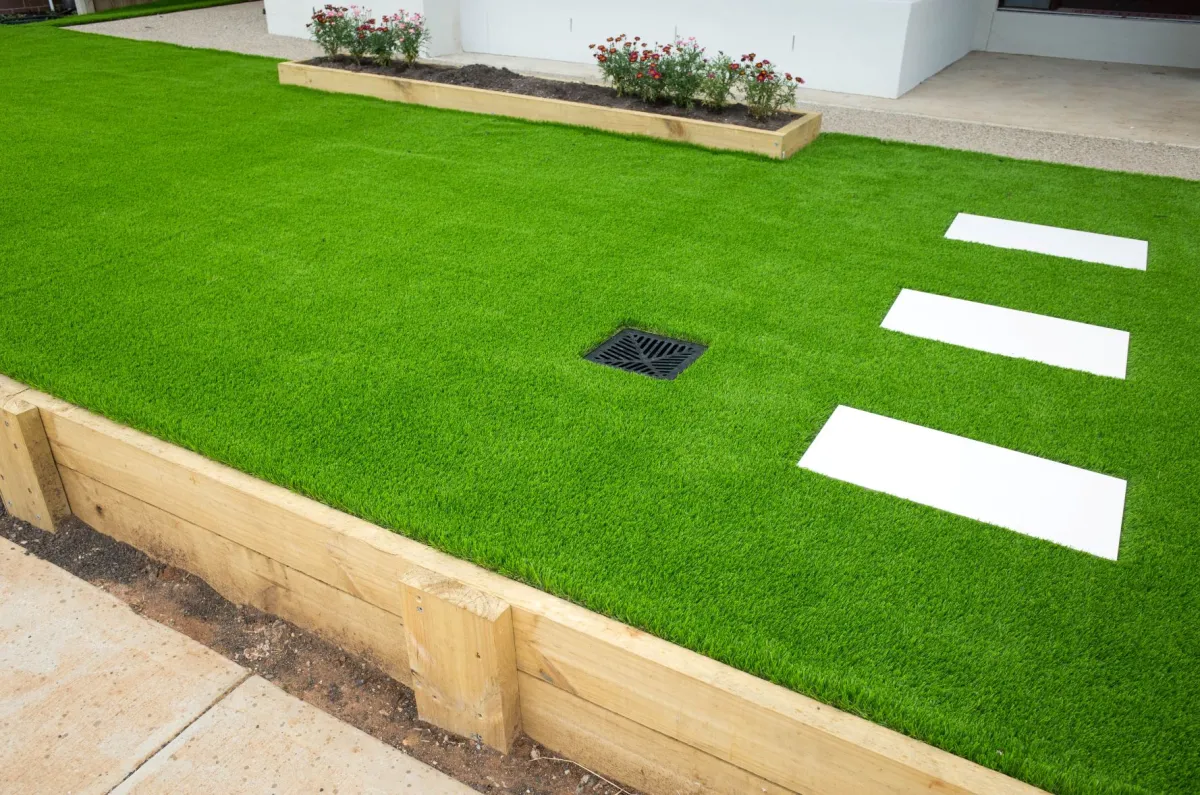
Natural grass lawns require a lot of water, especially in places as hot as the Phoenix Valley. Any areas where natural grass can be removed will reduce water use. Installing artificial turf maintains the same aesthetic appeal without the need for water.
Drawbacks of Turf Lawns in Hot Climates
However, artificial turf gets extremely hot during Arizona summers. Recent studies have shown that artificial turf can get hotter than asphalt during the day, so homeowners should not assume that covering their entire yard with artificial grass is the perfect solution.
What is Arizona HB2131?
Governor Ducey signed HB2131 into law on March 30, 2022, to establish rules against bans on artificial turf by associations and planned communities. The bill faced substantial debate before being passed in the first Arizona legislative session of the year. Here are the most important aspects of HB2131 for HOAs and association members to understand.
No Bans on Artificial Turf
Planned communities in Arizona that allow natural grass on a member’s property cannot ban the installation or use of artificial turf on the property of any of its members. This new law does not apply to condominiums.
How HOAs May Regulate Artificial Turf
Planned communities can adopt and enforce reasonable regulations regarding the installation, aesthetics, and appearance of artificial turf. However, those rules may not prevent the installation of artificial turf in the same way as natural grass is allowed by the community documents.
HB2131 affirms that planned communities may establish rules regarding the location on the property and the percentage of the property that may be covered with natural grass or artificial turf, provided they are treated the same.
Can HOAs Prohibit the Use of Artificial Turf in Arizona?
HOAs may want to limit the use of artificial turf in Arizona communities for various reasons. Under the law, it is possible to restrict the use of artificial turf, but only under specific conditions.
Areas Maintained by the HOA
An HOA in Arizona may prohibit the use of artificial turf in areas that the association is responsible for maintaining or irrigating. This may include common areas as well as private property, depending on the HOA’s CC&Rs.
Many HOAs offer some form of front-yard maintenance or irrigation as a service to homeowners and to maintain community aesthetics. In such cases, the HOA may be able to prohibit the installation of artificial turf in these areas.
New Installations of Grass and Turf
If HOAs may prohibit new installations of natural grass on a homeowner’s property, they may also prohibit the new installation of artificial turf.
Double-check your community’s CC&Rs with our Arizona association governance lawyers. If the HOA is not allowed to prohibit new installations of natural grass, its ability to restrict new installations of turf may be limited.
Converting from Grass to Turf
The above restrictions on new installations of grass or turf do not apply if a homeowner is converting parts of their property from natural grass to artificial turf.
Permissible HOA Requirements for Artificial Turf
While HOAs may not outright ban all uses of artificial turf, they may impose reasonable restrictions that comply with Arizona law.
Maintenance Requirement
HOAs may require homeowners to remove and replace the artificial turf if it is not maintained in accordance with the HOA’s maintenance standards.
If a homeowner installs artificial turf and fails to maintain it in accordance with the lawn maintenance requirements set forth in the CC&Rs, the HOA may order the homeowner to remove the turf. Again, the maintenance requirements in the CC&Rs must be reasonable.
Removal of Health or Safety Hazards
Artificial turf does not decompose like natural grass. If turf becomes unsanitary due to a lack of cleaning or other maintenance, it will only get worse until it is cleaned or removed. As such, HOAs may order the removal of turf that is so unsanitary that it is dangerous.
An HOA may require the removal of the artificial turf that a member has already installed if it creates any health or safety risks, especially if the member has not corrected the problem.
Similarly, if turf creates a safety risk, such as becoming a serious tripping hazard in common walkways due to a lack of care and maintenance, the HOA may order the homeowner to remove it.
Unique Vegetation or Geological Conditions
This law will not apply to any planned community with unique vegetation or geologic characteristics that the HOA needs to preserve. Those characteristics and features are enhanced, supported, or viably protected because of the natural landscaping materials that have continuously existed.
If turf, or the removal of turf, is somehow necessary to protect unique environmental elements of the community’s landscape, the HOA may have more room to regulate or restrict its use by members.
What if a Homeowner Installs or Removes Artificial Turf in Violation of HOA Rules?
If a homeowner installs or removes turf or natural grass in violation of the HOA’s CC&Rs, the HOA may take legal action with help from a lawyer. Proper legal procedure must be followed to make sure any penalties and fines are legally enforceable.
Providing Written Notice of the Violation
The first step an HOA may take is to provide the homeowner with written notice of the violation. This should be accompanied by some sort of proof of the violation. For example, photos of the illegal turf or grass may be included in the notice, along with details about when they were taken.
The homeowner must receive formal written notice of a violation before any penalties can be imposed.
Time to Cure
Once the homeowner has been notified, they must be given a period in which they can cure the violation and avoid penalties. If the homeowner can quickly remove the turf or reinstall it in a way that complies with the HOA’s rules, the problem may be solved.
If the homeowner fails to cure the violation, or the violation cannot be cured, your HOA’s lawyer can help you take further steps.
Opportunity for a Hearing
Under Arizona law, homeowners facing penalties for HOA violations must be given the opportunity for a hearing. Homeowners may plead their case to the board if they choose. While many homeowners forego a hearing regarding violations, especially minor ones, it is still crucial that the HOA offers the opportunity. If they do not, fines and penalties may not be legally enforceable.
Impose Fines
As long as all proper legal procedures have been followed, the HOA may impose reasonable fines for the illegal installation of artificial turf. Remember, fines must be imposed according to a fine schedule that is made publicly available to homeowners ahead of time. Also, fines must be reasonable and in proportion to the violation.
HOAs may continue to impose fines for as long as the violation persists. If the homeowner pays the fine but still refuses to remove the turf or reinstall it according to HOA rules, the HOA may impose further fines.
Handling Artificial Turf Laws as an Arizona HOA
When new laws are passed that specifically affect associations and planned communities, it is advisable to review your covenants, conditions, and restrictions (CC&Rs) to ensure no rules need updating.
If your community has debated how to handle landscaping issues like artificial turf or removal of natural grass, it is an important time to work with an HOA law firm to make sure your governing documents are not at odds with HB2131 and the new artificial turf laws in Arizona.
Contact Our Arizona Association Governance Lawyers for Legal Support
To get a confidential legal assessment of your situation from our Arizona association governance lawyers, call Halk, Oetinger, and Brown at (602) 759-9205.