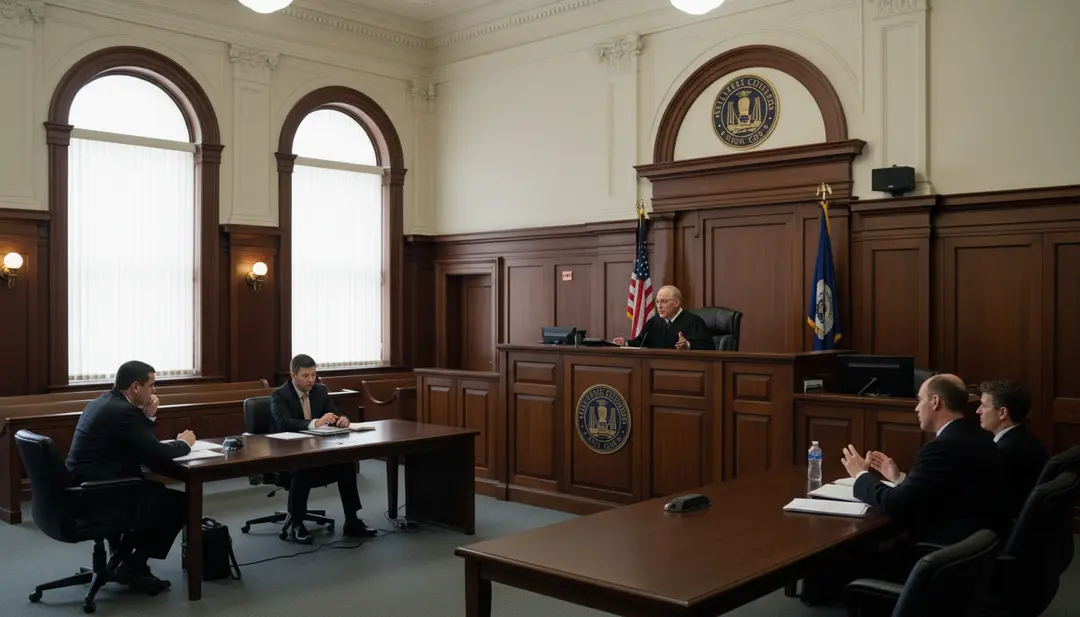
HOA boards are much more than groups of homeowners. They are legal organizations that may set and impose legally binding rules for homeowners within a specific community. HOAs are required to abide by certain laws in Arizona, and a recent court ruling changed how those rules are followed.
The Arizona Court of Appeals recently decided the case of AZ N H Revocable Trust v. Sunland Springs. This case involved a dispute between a homeowner and the HOA board in a particular community. The case revolved around issues of how closed and open meetings are conducted and how information about closed meetings should be disseminated to voting members of the association. Although these issues might sound like bureaucratic jargon, they play a significant role in keeping HOA homeowners and voters informed about what their HOA board is doing.
If your HOA needs legal help, call our Arizona association governance lawyers at Halk, Oetinger, and Brown at (602) 759-9205 for a confidential legal assessment.
Can Voting Occur in Closed HOA Meetings in Arizona?
A major component of the recent decision from the Arizona Court of Appeals is when association voting may occur. HOAs may conduct open meetings where all voting members may attend, and closed meetings where specific, limited topics are considered, often involving private or sensitive information.
Open Meetings vs. Closed Meetings
HOAs regularly conduct open meetings and closed meetings to discuss community issues. The difference is that all voting members may attend open meetings, while closed meetings are more restricted.
Under the law, meetings may be closed for the “consideration” of certain subjects. Such subjects often involve sensitive or private information. Often, meetings are closed when an HOA board discusses legal disputes or consults with legal counsel.
In the recent case in the Arizona Court of Appeals, the court had to determine whether “consideration” at closed meetings included voting.
When Voting is Allowed to Occur
In the case of A Z N H Revocable Trust v. Sunland Springs, one of the major issues of the case is whether an HOA board may vote on certain issues at closed meetings. The court ultimately ruled that this is not allowed, and voting must happen only during open meetings where all voting members may attend.
The Court reasoned that, under Arizona law, voting members must be allowed to speak to the board before a vote, which would not be possible if voting were permitted in closed meetings.
Why Public Policy Favors Open Meetings
Our Arizona association governance attorneys agree that public policy in Arizona generally favors voting in open meetings and not closed sessions. While certain issues may be best left for consideration in a closed meeting, voting on the issue should be held in open sessions. Otherwise, the HOA would lack democratic transparency.
In short, before an issue is put to a vote, it should first be discussed in a closed session, if necessary, before being voted on in an open session.
When Must HOAs Determine What Will Be Considered in a Closed Meeting?
While closed meetings are not illegal, their lack of transparency can be frustrating for community members and HOA voters. The Court in the Sunland Springs case had trouble deciding whether an HOA board must explain why certain issues are reserved for closed meetings.
Deciding What Will Be Considered in a Closed Meeting
In the Sunland Springs case, the HOA allowed its President to determine what issues were discussed in closed meetings and why. The homeowner who filed the appeal in this case argued that formal action through open meetings should be used to determine what is considered in closed meetings, thus allowing voting members a say on closed meetings.
The court remanded the issue because there was insufficient information to determine whether this method complies with the law.
Who is Allowed to Determine What is Considered in a Closed Meeting?
As it stands now, HOA boards do not have to permit voting members to vote on what is or is not considered in closed meetings, and board members may decide without formal action at open meetings what will be discussed in a closed meeting.
The court explained that nothing in the law suggests that the only way an HOA may comply with statutory law is to decide what is considered in closed meetings through formal action at open meetings.
Whether the President of the HOA alone has the authority to decide what is considered at a closed meeting remains up in the air.
How Do HOAs Provide Necessary Information to Voters Regarding Open and Closed Meetings?
The issues up for consideration at HOA meetings must be explained to members in advance. However, in the Sunland Springs case, there was some debate over whether notice was required for all meetings or only for open meetings.
Must HOA Boards Provide Notice Regarding Closed Meetings in Arizona?
The appealing homeowner in the Sunland Springs case argues that notice regarding closed meetings should provide members with information reasonably necessary to inform them of closed meetings. They further argued that such notice was adequately provided.
The opposing party argued that the law requires notice only for open meetings. The Court disagreed and concluded that notice must be provided for open and closed meetings.
How Does Notice Comply with Arizona HOA Laws?
What exactly constitutes adequate notice of a closed meeting? The Court in this case ultimately decided that adequate notice for a closed meeting requires only minimal information.
The Court determined that proper notice of a closed meeting must include the meeting's date, time, and location. Next, the HOA must include the specific paragraph from A.R.S. § 33-1804(D) that justifies the closed meeting. No further information about what is considered in the meeting or why is required in the notice.
Meeting Agendas for Closed Meetings
While Arizona statutes specify requirements for notices of closed HOA meetings, they do not explain what is required for meeting agendas.
To clear up this ambiguity, the Court in Sunland Springs looked to the statutes under A.R.S. §§ 33-1804(A) and (F).
Subsection (A) requires that association boards allow members to speak after the board has considered and discussed a specific agenda item, but before formal action on that item is taken. Subsection (F) requires association boards to provide agendas that include sufficient information to inform members of the matters discussed or decided in advance of meetings.
The Court determined that HOA boards are required to provide information in meeting agendas reasonably necessary to inform members, including for closed meetings. While this does not include personally identifying information or information protected by the attorney-client privilege, there must be more information than a mere reference to the paragraph under subsection (A).
Ask Our Arizona Association Governance Attorneys for Legal Support
If your HOA needs legal help, call our Arizona association governance lawyers at Halk, Oetinger, and Brown at (602) 759-9205 for a confidential legal assessment.